
Honoring God with Our Whole Lives
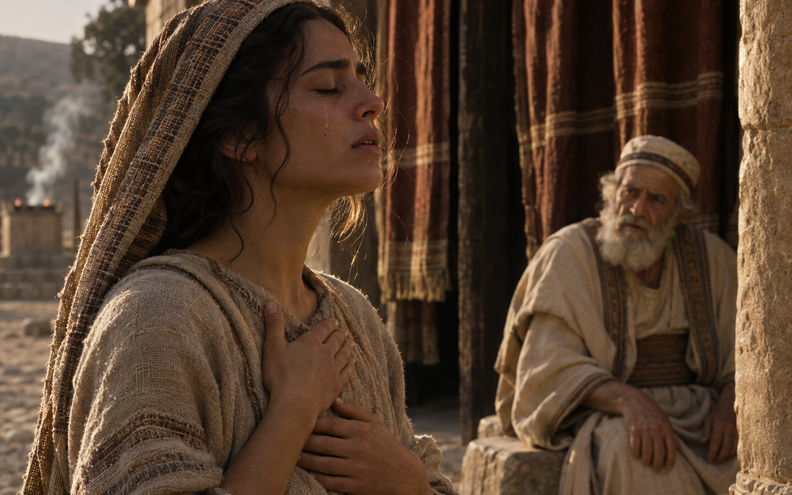
“Them that honour me I will honour, and they that despise me shall be lightly esteemed” (1 Samuel 2:30). These words were spoken to the household of Eli the priest. They belong to a painful account of people who had been entrusted with sacred service but had ceased to value it. Yet the warning also contains a promise: God sees those who honor Him. He notices faithfulness, even when no one else does.
When we hear the word “worship,” we often think of music, singing, and believers gathered together. But honoring God reaches far beyond those moments. It means acknowledging His authority and taking His Word seriously. It shapes the way we speak at home, carry out our work, keep our promises, and make decisions. We truly honor God when our devotion to Him shapes how we live beyond the walls of our congregation.
That devotion includes a willingness to receive correction. Words of comfort are easier to hear than the truth about our own failings. Yet a wise person welcomes the opportunity to change. When the Holy Spirit exposes sin, He calls us to leave it behind and continue walking with God. Accusation tells us that we are beyond hope. God’s correction shows us what needs to change and draws us back to the Father.
As we receive that correction, we need to remember whose we are. We are His children, and He cares deeply about who we are becoming. The apostle Paul writes: “For if we would judge ourselves, we should not be judged. But when we are judged, we are chastened of the Lord, that we should not be condemned with the world” (1 Corinthians 11:31-32). God’s discipline can be painful, but its purpose is to restore us. He works on our character, teaches us obedience, and shapes us into the likeness of Yeshua.
Nor does He leave us to face that pain alone. In a familiar Christian story, a man looks back over his life and sees his footprints in the sand alongside the Lord’s. During the hardest seasons, however, only one set of footprints remains. He assumes that God abandoned him precisely when he needed Him most. Instead, he learns that those were the times when the Lord carried him. The image reminds us that we do not always feel God’s presence. Even in confusion and doubt, we can still turn to Him.
Confidence in God’s love gives us the courage to grow. We need to hear that He loves us, but we also need to respond. We cannot spend our whole lives seeking reassurance while avoiding responsibility for our choices. As we mature, we begin to ask: How does my love for the Lord find expression in daily life? What is changing in my speech, my relationships, and my habits? Am I willing to act on what He shows me?
One question calls for particular honesty: Whose approval are we seeking? Yeshua said, “How can ye believe, which receive honour one of another, and seek not the honour that cometh from God only?” (John 5:44). The desire to please people can quietly take over even our service to God. We become preoccupied with the impression we make, while faithfulness to Him slips into the background.
This danger also touches our relationship with Israel. Love for its people should find expression in practical support and acts of kindness. Yet a desire for recognition from influential people must never displace our concern for salvation or our witness to Yeshua. Ministry loses its direction when, for the sake of human approval, we stop speaking about the One we set out to serve. What matters before God is faithfulness to the work He has entrusted to us.
That same faithfulness is needed in everyday life. Our families know us in ways the congregation may not. They see us tired, irritable, and absorbed in our own concerns. At home, the relationship between our professed faith and our actual conduct becomes clear. A husband needs to express love for his wife in both words and actions. A wife needs to treat her husband with respect. Anyone who makes a promise needs to keep it. All of us must learn to speak in ways that help those closest to us feel cared for, rather than merely instructed. Our treatment of the people we live with is inseparable from our devotion to God.
The foundation for this life is what Yeshua has accomplished for us. He invites us: “Come unto me, all ye that labour and are heavy laden, and I will give you rest” (Matthew 11:28). We cannot free ourselves from sin through effort alone. The repeated sacrifices pointed to the need for a perfect sacrifice, and Yeshua offered Himself for our salvation. We come to Him with our burdens and receive the freedom to serve God without remaining under sin’s dominion.
This new life needs to be nurtured. Our inner being must be strengthened by God’s Word so that our desires and habits no longer rule us. Faith is meant to shape both our thinking and our conduct. We turn away from foul language because we want our speech to honor the Lord. We reject arrogance because we owe everything to His mercy. We learn self-control because we belong to Him.
The book of Acts shows us how the first disciples grew. After about three thousand people received the message and were baptized, their lives took on a clear pattern: “And they continued stedfastly in the apostles’ doctrine and fellowship, and in breaking of bread, and in prayers” (Acts 2:42). The phrase “continued stedfastly” matters. Teaching, fellowship, the Lord’s Supper, and prayer became the foundation of their shared life. Through that steady commitment, they learned to know and serve God.
Such perseverance rests on confidence in God’s Word. When the Lord showed Jeremiah a branch of an almond tree, He said, “Thou hast well seen: for I will hasten my word to perform it” (Jeremiah 1:12). Jeremiah was to rely on the faithfulness of the One who spoke to him. We, too, learn to hold fast to God’s Word, return to it, and allow it to direct our lives, even before we see His promises fulfilled.
We need a congregation to help us grow in this way. We may be capable, experienced, and accustomed to managing on our own, but within the Body of Messiah, we need one another. God teaches us through our brothers and sisters: through instruction, shared prayer, someone’s testimony, and sometimes even through our own children. A willingness to learn from others helps us remain humble. Sharing in the life of a congregation also gives us opportunities to support those who need us.
This calling belongs to every believer. Peter writes: “But ye are a chosen generation, a royal priesthood, an holy nation, a peculiar people; that ye should shew forth the praises of him who hath called you out of darkness into his marvellous light” (1 Peter 2:9). Leaders help the congregation mature, but they cannot fulfill our calling on our behalf. Every believer is called to serve God, beginning with the way we live and care for those in our own homes.
We bear a particular responsibility toward our children. They hear what we teach, but they watch our conduct even more closely. They notice our attitude toward the congregation, the way we speak about others, what we do after an argument, and whether we remain faithful to God when life becomes difficult. Our example does not remove their freedom to choose, but it leaves a lasting impression. If we want to pass on our faith, we must be willing to live honestly before the Lord ourselves.
Hannah’s story shows how such faithfulness can shape the next generation. For a long time, she had no children. Peninnah provoked her, and year after year the pain returned. Hannah wept and could not eat. Her circumstances gave her every reason to become bitter, yet she brought her grief to the Lord. As she prayed, her lips moved, but no sound could be heard. Eli, watching her, mistakenly concluded that she was drunk.
Even in the house of the Lord, Hannah was misunderstood. But she explained to the priest: “I am a woman of a sorrowful spirit: I have drunk neither wine nor strong drink, but have poured out my soul before the LORD” (1 Samuel 1:15). She did not conceal her pain or pretend to be stronger than she was. She brought God the burden she could not carry alone. After hearing her, Eli blessed her, and she left with a changed heart: “So the woman went her way, and did eat, and her countenance was no more sad” (1 Samuel 1:18).
In prayer, Hannah had vowed to dedicate her son to the Lord for his entire life. When Samuel was born and had grown old enough, she kept her promise. Her gratitude took the form of a costly act: she brought her long-awaited child to Eli to serve the Lord. Her prayer of praise followed that dedication: “My heart rejoiceth in the LORD, mine horn is exalted in the LORD: my mouth is enlarged over mine enemies; because I rejoice in thy salvation” (1 Samuel 2:1). Hannah honored God both by bringing Him her request and by remaining true to her word.
Keeping our promises is a serious part of faith. It is easy to speak of surrender in a moment of intense emotion. It is harder to remain true to those words once circumstances have changed and we have received what we wanted. Yet that is often when the place God holds in our hearts becomes clear. Honoring God means remaining faithful to Him after our prayers have been answered.
Scripture also shows us a very different choice. Esau treated his birthright as expendable when he wanted immediate satisfaction. In his hunger, his inheritance seemed less valuable than a meal. His story challenges us to consider how readily we might surrender something precious to satisfy a passing desire. We, too, face decisions in which comfort, advantage, or the approval of others can seem more attractive than faithfulness.
Yeshua rejected that temptation. When offered the kingdoms of the world and their glory in exchange for worshiping the tempter, He answered, “Thou shalt worship the Lord thy God, and him only shalt thou serve” (Matthew 4:10). He remained faithful to the Father all the way to the cross. His suffering did not mean He had abandoned His chosen course; He willingly laid down His life. The Father raised Him from the dead, and the message of the salvation He accomplished spread to the ends of the earth. In Yeshua, we see what it means to love the Father and fulfill His will to the very end.
Honoring God requires humility. “By humility and the fear of the LORD are riches, and honour, and life” (Proverbs 22:4). To humble ourselves before the Lord is to acknowledge that His judgment is right and to place our trust in Him. This does not mean calling evil good or ceasing to pray when hardship comes. We can ask for help and seek a way forward while submitting our decisions to Him. In this way, faith finds expression in both words and actions.
In Isaac’s life, God’s blessing became evident even to those who had previously asked him to leave. Later, Abimelech came to him with his companions and acknowledged, “We saw certainly that the LORD was with thee” (Genesis 26:28). Isaac did not have to campaign for their recognition. Neither do we need to turn ministry into a struggle to prove our importance. Our responsibility is to walk faithfully before God and leave the outcome of our service in His hands.
Sometimes a long wait separates prayer from its answer. We continue praying for our children and grandchildren, supporting ministry, and helping others while facing needs of our own. In those seasons, it is especially important to persevere. “For ye have need of patience, that, after ye have done the will of God, ye might receive the promise” (Hebrews 10:36). God’s intervention may take us by surprise, but the time spent waiting does not make our faithfulness meaningless.
Hannah could not have foreseen the whole course of her son’s life. Samuel began serving before he knew how to recognize the Lord’s voice. He grew and learned to listen. Later, Scripture records: “And Samuel grew, and the LORD was with him, and did let none of his words fall to the ground” (1 Samuel 3:19). All Israel came to recognize him as a prophet of God. He anointed Saul and later David, from whose line the Messiah would come. A mother’s faithfulness became part of a story whose significance reached far beyond her own family.
Let us therefore look for opportunities to serve the Lord wherever we are. Let us take part in the life of a congregation, grow through Scripture and prayer, and strengthen our brothers and sisters. At home, let us keep our promises, care for those we love, and ask forgiveness when we are wrong. At work, let us act with integrity. In hardship, let us continue turning to God. This is how honoring Him becomes a way of life. The Lord sees such faithfulness, and His promise stands: He will honor those who honor Him.
Pastor Oren Lev Ari