
A Prisoner of Christ
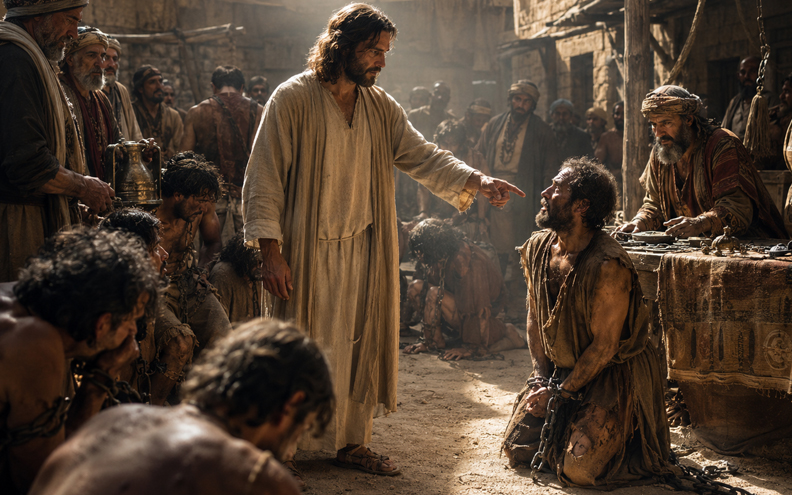
There are words that, at first glance, seem to contradict themselves. “A prisoner of Christ” is one of them. How can a person be a prisoner and yet be free? How can one surrender and not lose oneself, but for the first time truly find life? Yet this is precisely how Scripture reveals the path of the person whom Christ has brought out of the slavery of sin and into the captivity of His love.
The prophet Isaiah declares: “The Spirit of the Lord GOD is upon me; because the LORD hath anointed me to preach good tidings unto the meek; he hath sent me to bind up the brokenhearted, to proclaim liberty to the captives, and the opening of the prison to them that are bound” (Isaiah 61:1). These words open the very heart of God’s mission. God comes not to the strong, the self-assured, and the self-sufficient, but to those who have recognized their need. He comes to those who no longer hide behind religious appearances, human achievements, or their own righteousness. He comes to the captives, to the brokenhearted, to those who have come to understand: no one can save me but God.
Scripture speaks with absolute clarity: “For all have sinned, and come short of the glory of God” (Romans 3:23). This is not merely a theological formula. It is a diagnosis of the human condition. Sin robs a person of the glory of God, and with it, of inner freedom. A person may look free, make decisions, build plans, possess money, status, education, and family, yet remain inwardly bound. Paul describes this struggle in these words: “For the good that I would I do not: but the evil which I would not, that I do” (Romans 7:19). A person wants what is good, but lacks the strength to carry it out. He longs for light, yet finds himself again in darkness. He desires purity, yet returns to what destroys the soul.
Imagine an ancient slave market, where people were displayed, humiliated, appraised, bought, and sold. A slave has no future, no dignity, no right to belong to himself. This is the image of bondage to sin. A person may not recognize it immediately, but sin treats him in exactly this way: it strips him of dignity, devalues him, makes him dependent, and forces him to do what his soul no longer wants. Into this terrible scene Christ enters – not as an observer, and not as a judge standing at a distance, but as the One who has come to redeem.
And even more than that: He did not merely pay the price for slaves. He Himself took our place. The apostle Paul writes of Him: “But made himself of no reputation, and took upon him the form of a servant, and was made in the likeness of men” (Philippians 2:7). This is the astonishing depth of the Gospel. The Lord of glory became a servant so that slaves might become free. The Holy One took the place of the guilty. The One who possessed all authority willingly humbled Himself in order to lift those who could no longer lift themselves.
This is why the ministry of Yeshua begins with the proclamation of freedom. He comes to the poor in spirit, to the brokenhearted, to the captives, to the blind, to the weary and wounded. His first word is not accusation, but good news. He brings the Word into the place where a person has grown accustomed to hearing only the voice of shame, fear, and condemnation. “In the beginning was the Word, and the Word was with God, and the Word was God… In him was life; and the life was the light of men. And the light shineth in darkness; and the darkness comprehended it not” (John 1:1, 4-5). When the Word of God enters the heart, it begins to break open the inner prison.
But a person must stop and listen. Restlessness makes the heart deaf. One may spend years saying, “God does not speak to me,” while never truly becoming still before Him. Scripture says: “Be still, and know that I am God: I will be exalted among the heathen, I will be exalted in the earth” (Psalm 46:10). It is impossible to hear God when the soul is constantly filled with noise, fear, hurry, self-justification, and inner argument. Freedom begins where a person stops clinging to every human support and says: “God alone.”
A broken heart is not weakness of character, nor is it religious gloom. It is honesty before the holiness of God. This is what happened to Peter when he saw the miraculous catch of fish and suddenly understood who was standing before him. He said to Yeshua: “Depart from me; for I am a sinful man, O Lord” (Luke 5:8). In the presence of Christ, a person stops playing the role of the righteous. He sees his own insufficiency, but it is precisely there that he encounters not rejection, but mercy.
Yet the freedom Christ gives is not meant for a return to the old slavery. This is where the meaning of the phrase “prisoner of the Lord” is revealed. Paul did write his letters from prison, but his words reach deeper than outward circumstances. He was not merely a man imprisoned for preaching the Gospel. He was a man who had freely given himself to Christ. He could say: “All things are lawful unto me, but all things are not expedient: all things are lawful for me, but I will not be brought under the power of any” (1 Corinthians 6:12). This is the language of true freedom: I may have the right to do something, but not every possibility is worthy of my calling.
Paul speaks of the things that had once been advantages to him but had now lost their former value: “But what things were gain to me, those I counted loss for Christ. Yea doubtless, and I count all things but loss for the excellency of the knowledge of Christ Jesus my Lord: for whom I have suffered the loss of all things, and do count them but dung, that I may win Christ” (Philippians 3:7-8). This is not religious self-torment or contempt for life. It is the discovery of a greater treasure. When a person truly sees Christ, much of what once ruled him loses its power.
A prisoner of Christ is a person who no longer needs to be coerced from the outside, because his heart has been captured by the love of the Lord. Christ does not break the human will by force. He knocks. He calls. He opens the eyes. He reveals His goodness so clearly that a person raises the white flag and says, “I surrender.” But this surrender is not to an enemy; it is to the Savior. It is not the loss of freedom, but the way out of slavery to the only One who is worthy of complete trust.
Paul did not consider himself to have already arrived, even though he was an apostle, a servant of God, and a man of great revelation and suffering. He wrote: “Not as though I had already attained, either were already perfect: but I follow after… Brethren, I count not myself to have apprehended: but this one thing I do, forgetting those things which are behind, and reaching forth unto those things which are before, I press toward the mark for the prize of the high calling of God in Christ Jesus” (Philippians 3:12-14). This is the maturity of faith: not living in the past, not excusing oneself by the past, not boasting in the past, but moving forward after Christ.
A prisoner of the Lord does not live only for himself. He understands that he belongs to a body, to the family of God, to the community, to the people whom God is building. Therefore Paul writes: “I therefore, the prisoner of the Lord, beseech you that ye walk worthy of the vocation wherewith ye are called, with all lowliness and meekness, with longsuffering, forbearing one another in love; endeavouring to keep the unity of the Spirit in the bond of peace” (Ephesians 4:1-3). The captivity of Christ is expressed not only in personal holiness, but also in the way we treat one another. Humility, meekness, patience, and the ability to preserve unity are marks of a person being formed by the Lord.
Such a person understands that each one has a measure of grace, a measure of faith, a gift, and a place in God’s purpose. He does not compete for visibility, does not build ministry around himself, and does not suppress others. He desires the whole body to grow. Paul says that Christ gave ministries “For the perfecting of the saints, for the work of the ministry, for the edifying of the body of Christ” (Ephesians 4:12). The goal is not for a few strong people to do everything for everyone else, but for every member to grow, be joined to the others, and serve according to the measure given by God.
A prisoner of Christ is also recognized by the way he speaks. Words reveal who rules the heart. We cannot say that the Spirit of God fills us while allowing our mouths to destroy, belittle, slander, spread fear, or poison others with bitterness. Scripture instructs us: “Let no corrupt communication proceed out of your mouth, but that which is good to the use of edifying, that it may minister grace unto the hearers” (Ephesians 4:29). Our words are meant to carry grace. Not sweet falsehood, not a religious mask, but truth spoken in the spirit of love and edification.
Paul continues: “And grieve not the holy Spirit of God, whereby ye are sealed unto the day of redemption. Let all bitterness, and wrath, and anger, and clamour, and evil speaking, be put away from you… And be ye kind one to another, tenderhearted, forgiving one another, even as God for Christ’s sake hath forgiven you” (Ephesians 4:30-32). This is not abstract morality. This is the practical life of the person who has given himself to Christ. If Christ has forgiven us, we cannot build our lives on hardness of heart. If He has shown us mercy, we cannot live as though mercy were needed only by us.
There is a moment of decision, and there is a moment of consecration. Decision is when a person answers the call of God. Consecration is when he confirms again and again, in different seasons of life: “Lord, I belong to You.” There are days of strength, and there are days of weariness. There are seasons of clarity, and there are times when a person asks himself whether he is truly in the right place and whether he has the strength to continue. But the captivity of Christ is the captivity of love. That love lifts us when our hands fall. It reminds us not in order to condemn us, but to say: there is no road back, because back there was death, and here there is life.
Today it is especially important to take seriously our choice, our consecration, and our calling. No one knows when the final moment will come, the final day, the final breath. We believe in the promises of God, we believe in His faithfulness, we believe in His mercy, and precisely for that reason we must not live carelessly. Christ does not betray. Circumstances may fail us, people may leave us, loved ones may not understand us, but the Lord is faithful. David said: “When my father and my mother forsake me, then the LORD will take me up” (Psalm 27:10).
A prisoner of Christ is not someone who lives under fear of punishment, but someone who has come to know a love stronger than his former chains. He remembers where the Lord brought him from, and therefore he does not want to return. He knows that Christ did not merely set him free from the slave market, but became a servant Himself, died, and rose again in order to restore the image of God in man. True freedom begins where a person stops resisting Christ and freely surrenders to His love. The best answer to God today is therefore simple and profound: Lord, I surrender. I belong to You. I want to follow You.
Pastor Oren Lev Ari