
Written in the Book of Life
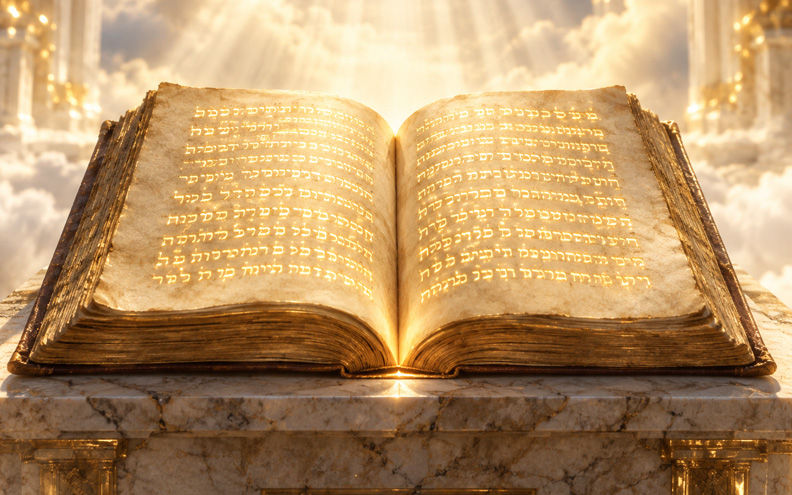
As Yom Kippur approaches, we once again hear words familiar to everyone living in Israel – the wish for a favorable inscription in the Book of Life. The phrase is deeply rooted in Jewish tradition, and believers in Yeshua sometimes repeat it without considering the theology it implies. But this raises an important question: does someone who has already received salvation through Yeshua the Messiah wait each year for God to decide once again whether his or her name will be written in the Book of Life? This is something we need to understand clearly. The issue is not whether we should repent, stand in reverence before God, or take Yom Kippur seriously. The issue is whether we replace grace with an attempt to obtain again what God has already given through faith in His Son.
One of the first significant references to God’s book appears after Israel’s sin with the golden calf. Moses goes up before the Lord and makes no attempt to excuse the people. He acknowledges the seriousness of what has happened and says, “Oh, this people have sinned a great sin, and have made them gods of gold. Yet now, if thou wilt forgive their sin–; and if not, blot me, I pray thee, out of thy book which thou hast written” (Exodus 32:31-32). The Lord answers him, “Whosoever hath sinned against me, him will I blot out of my book” (Exodus 32:33). Notice Moses’ own words: “thy book which thou hast written.” He speaks as someone who knows that his name has already been written there.
This is one of the most powerful pictures of intercession in all of Scripture. Moses does not distance himself from the people and say, “They sinned – deal with them.” He is willing to place himself alongside those for whom he is pleading. The apostle Paul later expresses a similar anguish for his own people: “For I could wish that myself were accursed from Christ for my brethren, my kinsmen according to the flesh” (Romans 9:3). This is love that does not ignore sin, yet continues to intercede for those who have sinned. Before we speak about the Book of Life, we must first recognize this: Moses acknowledges the people’s sin, because genuine repentance begins when a person stops justifying himself.
After the sin of the golden calf, Scripture specifically mentions Aaron: “And the LORD plagued the people, because they made the calf, which Aaron made” (Exodus 32:35). Aaron himself, however, was not struck down with the people. We cannot build an entire doctrine on this one verse, but it does remind us of an important truth: God sees not only outward actions but also the human heart. He is the One who knows the heart. Repentance begins within and then becomes visible in the way we live. The New Testament therefore says, “For with the heart man believeth unto righteousness; and with the mouth confession is made unto salvation” (Romans 10:10). God looks at our deeds, but He also knows the source from which those deeds flow.
Through the prophet Isaiah, the Lord calls Israel to genuine change: “Wash you, make you clean; put away the evil of your doings from before mine eyes; cease to do evil; Learn to do well; seek judgment, relieve the oppressed, judge the fatherless, plead for the widow. Come now, and let us reason together, saith the LORD: though your sins be as scarlet, they shall be as white as snow; though they be red like crimson, they shall be as wool” (Isaiah 1:16-18). God never suggests that the way a person lives is irrelevant to Him. On the contrary, He calls His people to turn away from evil, learn to do good, defend the vulnerable, and pursue what is right. Faith that never touches the way we live eventually becomes little more than empty words.
Scripture does indeed call for repentance, obedience, and works that confirm a changed heart. Faith without fruit is empty, because genuine faith inevitably becomes visible in a person’s life. Yet good works must never be turned into the basis of our justification before God. They bear witness to faith and flow from it, but they do not replace God’s grace or become the price of salvation.
That distinction is essential if we are to preserve the heart of the Gospel. Works matter, but they are not the price of our salvation. Paul writes, “For by grace are ye saved through faith; and that not of yourselves: it is the gift of God: Not of works, lest any man should boast. For we are his workmanship, created in Christ Jesus unto good works, which God hath before ordained that we should walk in them” (Ephesians 2:8-10). Salvation by grace comes first; then follows a life filled with the good works God has prepared for those who belong to Him. Good works do not write our names in the Book of Life – they are the fruit of a life that already belongs to God.
This is why Yeshua’s words in Luke 10 are so important. The disciples return from ministry filled with joy: “Lord, even the devils are subject unto us through thy name” (Luke 10:17). They had witnessed the power of God, the deliverance of people, and victory over spiritual darkness. Yeshua does not deny what has happened. He tells them, “I beheld Satan as lightning fall from heaven. Behold, I give unto you power to tread on serpents and scorpions, and over all the power of the enemy: and nothing shall by any means hurt you” (Luke 10:18-19). Yet He immediately directs their joy toward something far greater than any visible success in ministry: “Notwithstanding in this rejoice not, that the spirits are subject unto you; but rather rejoice, because your names are written in heaven” (Luke 10:20).
When a person sees God’s intervention, deliverance, healing, or a clear answer to prayer, great joy naturally follows. Yet even that joy must not obscure what matters most. Deliverance is wonderful. Healing is wonderful. Answered prayer is wonderful. But eternal salvation is greater. We may face pressure in our families, finances, work, or ministry. We may worry about the future and grow weary under difficult circumstances. Yet the believer still has a reason for joy that no temporary trouble can take away. Yeshua told His disciples to rejoice because their names were written in heaven.
At the same time, this passage carries a warning. A person may witness the power of God, take part in ministry, and walk alongside Yeshua – yet later turn away. Judas remains the most sobering example. He was among Yeshua’s disciples, heard His words, witnessed His miracles, and participated in ministry, yet eventually betrayed Him. Later, when Yeshua spoke about His flesh and blood, many of His disciples also rejected what they heard: “From that time many of his disciples went back, and walked no more with him” (John 6:66). The fact that someone was once close does not give that person the right to treat salvation carelessly.
In this context, we must also remember Yeshua’s words about blasphemy against the Holy Spirit: “Wherefore I say unto you, All manner of sin and blasphemy shall be forgiven unto men: but the blasphemy against the Holy Ghost shall not be forgiven unto men. And whosoever speaketh a word against the Son of man, it shall be forgiven him: but whosoever speaketh against the Holy Ghost, it shall not be forgiven him, neither in this world, neither in the world to come” (Matthew 12:31-32). These words have been understood in different ways, but one truth remains central throughout the Gospel: a person cannot knowingly reject God’s testimony concerning His Son and at the same time expect to receive salvation apart from that Son. Yeshua entered the world through the work of the Holy Spirit, and Mary answered God’s messenger, “Behold the handmaid of the Lord; be it unto me according to thy word” (Luke 1:38). To reject the Son of God is to reject the way of salvation God Himself has established.
This is why believers should not live in fear that every wrong word, sinful thought, or failure automatically erases their name from the Book of Life. Sin remains sin. Grace must never be used to excuse impurity, dishonesty, disobedience, or destructive behavior. We are called to repent and turn away from evil. But after genuine repentance, we must also believe that God truly forgives. Otherwise a person can spend years trapped in self-condemnation, repeatedly asking forgiveness for the same thing and eventually wondering whether he or she is saved at all.
The believer’s assurance does not rest on never failing, but on the fact that salvation is found in Yeshua the Messiah. Our eyes must not remain fixed on our own ability to make ourselves righteous, but on the finished work of the Lord. When the people asked Yeshua, “What shall we do, that we might work the works of God?” He answered, “This is the work of God, that ye believe on him whom he hath sent” (John 6:28-29). The human heart naturally wants to bring God evidence of its own worthiness, but salvation does not begin there. It begins with faith.
This is precisely where the problem with wishing a believer “a good inscription in the Book of Life” becomes clear. If the phrase implies that God must now decide once again whether someone who has already trusted in Yeshua will be written into the Book of Life for another year, then without realizing it we have moved from grace back toward an attempt to earn salvation. Of course we repent. We ask God to cleanse us, change us, and show us what needs to be put right. Yom Kippur confronts us seriously with sin, judgment, and the need to be reconciled to God. But for the believer in Yeshua, the question is not whether he can somehow secure a new inscription each year. The question is whether he trusts the One who has already accomplished the work of salvation.
This becomes especially clear in Paul’s letter to the Galatians. He addresses people who began in faith but were then being drawn back toward an attempt to justify themselves through works of the law: “O foolish Galatians, who hath bewitched you, that ye should not obey the truth?” (Galatians 3:1). A few verses later he asks, “Are ye so foolish? having begun in the Spirit, are ye now made perfect by the flesh?” (Galatians 3:3). The danger was not their desire to live holy lives. Holiness is essential. The danger began when the foundation of salvation started shifting from God’s grace to human achievement.
Can salvation be lost? Within this framework, the issue is not every human weakness or failure, but a person’s relationship to the Savior Himself. Yeshua says, “I am the way, the truth, and the life: no man cometh unto the Father, but by me” (John 14:6). The apostles likewise proclaim, “Neither is there salvation in any other: for there is none other name under heaven given among men, whereby we must be saved” (Acts 4:12). If a person knowingly rejects Yeshua and begins looking for another basis on which to be justified before God, that person is not merely abandoning a religious formula. He is turning away from the very Lord of salvation. This is why the faith we have received must never be treated lightly.
The prophet Daniel also connects God’s book with the final destiny of humanity: “And at that time thy people shall be delivered, every one that shall be found written in the book. And many of them that sleep in the dust of the earth shall awake, some to everlasting life, and some to shame and everlasting contempt” (Daniel 12:1-2). This prophecy is addressed to Israel and offers hope in the midst of a future time of severe distress. Here the Book of Life is no longer merely an image of blessing for another year. It is connected with resurrection, eternal life, and the final judgment of God.
The same theme continues in Revelation. “And all that dwell upon the earth shall worship him, whose names are not written in the book of life of the Lamb slain from the foundation of the world” (Revelation 13:8). John later sees the great white throne: “And I saw the dead, small and great, stand before God; and the books were opened: and another book was opened, which is the book of life: and the dead were judged out of those things which were written in the books, according to their works” (Revelation 20:12). Then comes the solemn statement, “And whosoever was not found written in the book of life was cast into the lake of fire” (Revelation 20:15). Finally, Scripture says of the city of the Lamb, “And there shall in no wise enter into it any thing that defileth, neither whatsoever worketh abomination, or maketh a lie: but they which are written in the Lamb’s book of life” (Revelation 21:27).
The Book of Life, then, is not merely a beautiful religious metaphor or a phrase for seasonal greetings. It concerns eternity. That is why we must understand where our hope truly rests. We are called to examine our hearts, turn away from sin, learn to do good, remain faithful to the Lord, and never treat salvation casually. But none of this should be transformed into an annual attempt to persuade God, through our own efforts, to write our names into His book. We are not saved because we have managed to present Him with a sufficiently impressive record of good deeds. We are saved because we have placed our trust in the Lamb of God.
Perhaps someone looks at life today and sees mostly problems. Something is going wrong in the family. An important question remains unanswered. There are struggles with finances, health, work, or ministry. There has been failure, careless words have been spoken, and the conscience still brings the past to mind. Yet we need to stop and remember not only what is happening around us, but what God has already done. He sent His Son. Yeshua died and rose again. The way of salvation has been opened to everyone who believes.
This is why Yeshua’s words to His disciples remain so important: “Rejoice, because your names are written in heaven” (Luke 10:20). Do not live as though every year you must somehow cause God to decide your eternal destiny all over again. If you have sinned, repent. Put right what needs to be put right. Learn to do good. Guard your heart. Follow the Lord. But do not turn back from grace to an attempt to earn salvation.
As Yom Kippur approaches and we once again hear the wish for a favorable inscription in the Book of Life, we need to remember what we believe. For the person who does not yet know the Savior, reconciliation with God remains the central question of life. But the one who has placed his trust in Yeshua is not called to manufacture a new hope through his own works. He is called to hold fast to the One who has already given that hope. We receive salvation by grace, treasure it, and remain faithful to Yeshua the Messiah.
The proper response of the heart, therefore, is not presumption but profound gratitude. We stand in awe of God not because we expect Him to reject us at any moment, but because we understand the price of our redemption. The risen Yeshua says, “Fear not; I am the first and the last: I am he that liveth, and was dead; and, behold, I am alive for evermore, Amen; and have the keys of hell and of death” (Revelation 1:17-18).
Stop and consider what God has done. In the midst of every problem, unanswered question, and struggle, we still have reason for deep joy and gratitude. We repent because we desire to live before God with clean hearts. We learn to do good because we belong to Him. We guard our faith and follow Yeshua because salvation is found in Him alone. But we do not live as though once a year God must decide all over again whether to write our names in the Book of Life.
For the believer in Yeshua, the foundation of hope has already been given: our names are written in heaven. That is why we can enter a season of repentance not trying to earn salvation, but with reverence and gratitude before the One who has saved us by His grace.
Pastor Oren Lev Ari