
Hanukkah: Be Renewed – Shine in the Dark
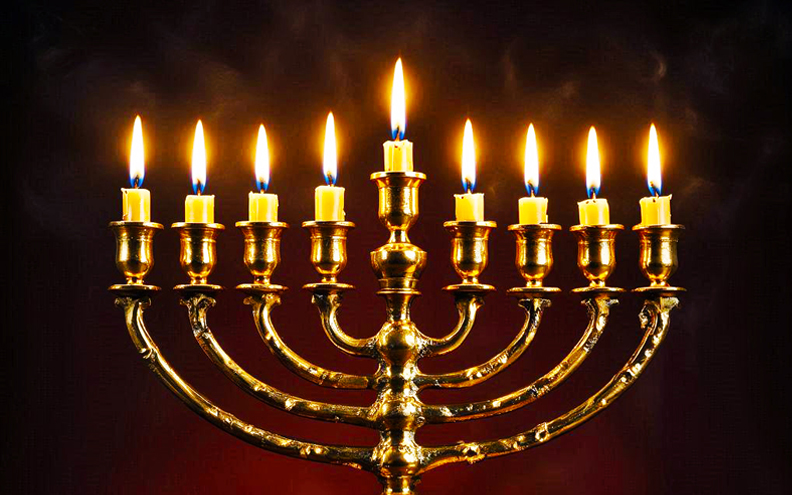
When Hanukkah lights are kindled, the atmosphere in a home subtly changes – warmer, quieter within, clearer in thought. Year after year, Hanukkah seems to ask the same honest question: what fills our days – and why is there sometimes so little light inside, even when everything around us appears fine?
It is no accident that on Hanukkah many read a psalm that sounds like a prayer of renewal. Its tone moves with startling grace – from pain to gratitude, from anxiety to peace, from night into morning. “A Psalm and Song at the dedication of the house of David” (Psalm 30:1). And then comes the confession of a man whom God has lifted up: “For his anger endureth but a moment; in his favour is life: weeping may endure for a night, but joy cometh in the morning” (Psalm 30:5). This is more than an ancient author’s experience – it is the rhythm of anyone who walks through trials and learns to entrust their life to God.
Hanukkah speaks of renewal not as a pretty word, but as a real necessity. A person may look composed on the outside, yet everything within seems to creak: words turn sharp, the eyes grow tired, the ears stop hearing those who are closest, and the heart responds with irritation more often than compassion. In such moments we need what Scripture so often portrays through oil – anointing oil. Renewal begins where God restores His tenderness and freshness to the heart. In the biblical imagination, oil carries the meaning of joy and strength, of presence and consecration, of moving forward without the rust of the soul.
That is why the theme of light fits Hanukkah so naturally. In Scripture, light is not about showmanship or a religious pose – it is a life made visible to others as a sign of God’s goodness. “Ye are the light of the world. A city that is set on an hill cannot be hid. Neither do men light a candle, and put it under a bushel, but on a candlestick; and it giveth light unto all that are in the house. Let your light so shine before men, that they may see your good works, and glorify your Father which is in heaven” (Matthew 5:14-16). To shine is to live in such a way that it becomes easier for people to believe in the Father – not harder to breathe when they are near us.
Hanukkah is not among the feasts commanded in the Torah, yet it reveals God’s character with remarkable clarity: with Him, what does not add up by human calculation can still become reality. The story of the Maccabees is the story of a minority that proved stronger than an army and stronger than fear. And it is fitting to remember the cry of victory first sung by the sea: “Who is like unto thee, O LORD, among the gods? who is like thee, glorious in holiness, fearful in praises, doing wonders?” (Exodus 15:11). When God is near, the impossible stops being a final verdict.
Yet Scripture is honest: before light arrives, darkness often gathers. Abraham received a vision that cannot be brushed aside: “And when the sun was going down, a deep sleep fell upon Abram; and, lo, an horror of great darkness fell upon him” (Genesis 15:12). Sometimes that “great darkness” comes not only from outside, but from within – when the soul quietly loses its priorities, when the things of God are postponed, when spiritual life is pushed to the leftovers of our schedule. Darkness rarely announces itself loudly. More often it persuades, distracts, promises, “Later.”
This is why Hanukkah so persistently brings us back to the theme of dedication. In Zechariah’s prophecy we hear the confrontation between Zion and Javan – not only as a historical clash, but as a portrait of competing values. “Turn you to the strong hold, ye prisoners of hope… When I have bent Judah for me, filled the bow with Ephraim, and raised up thy sons, O Zion, against thy sons, O Greece, and made thee as the sword of a mighty man” (Zechariah 9:12-13). A stronghold is not a point on a map. It is a decision of the heart: where do I return when I am weary, when I am confused, when I feel pulled to live “like everyone else”?
Here a simple truth matters: Renewal does not come without priorities – because priorities shape faithful decisions. You cannot live in constant rush and expect the soul to become luminous by itself. You cannot grieve the Spirit of God and assume peace will remain by habit. That is why Yeshua cleansed the temple not out of irritation, but out of love’s jealous zeal, and His disciples remembered: “The zeal of thine house hath eaten me up” (John 2:17). And the house of God is not only stone and walls. In a very real sense, it is also us, when we belong to Him.
The miracle of Hanukkah is bound up with oil. Oil that should have lasted one day burned for eight. That image sounds like a promise: when God renews, He does not give “just enough to limp through the evening,” but enough to walk the road. Yeshua spoke of the same reality when He explained the meaning of His departure: “Nevertheless I tell you the truth; It is expedient for you that I go away: for if I go not away, the Comforter will not come unto you; but if I depart, I will send him unto you” (John 16:7). The Holy Spirit comes not as a religious symbol, but as the living help of God – so that a person is renewed and begins to shine.
The same logic is heard in the story of the widow with Elisha: the oil did not cease while there were vessels. “And it came to pass, when the vessels were full, that she said unto her son, Bring me yet a vessel. And he said unto her, There is not a vessel more. And the oil stayed” (2 Kings 4:6). The question is not only the amount of “resources,” but the readiness of the heart to receive from God. That is why the parable of the ten virgins strikes so deeply: “But the wise took oil in their vessels with their lamps” (Matthew 25:4). In Scripture, wisdom often looks very practical: not living on someone else’s flame, not leaning on someone else’s faith, not postponing the inner life to “someday.”
The Hanukkah menorah also points to something else – the shamash, the servant candle that kindles the rest. There is a profound hint here: Yeshua does not merely “shine somewhere far away” – He ignites. And that means we are called not only to enjoy our own warmth, but to become people through whom others find light. We can shine in a way that kindles others – not through pressure, but through the life we share.
Then serving God stops feeling like a heavy obligation and becomes as natural as breathing. Light is always linked to giving. Where the heart has become the heart of a servant, a particular freedom appears – and the constant irritation begins to lose its grip. For God’s truth does not make a person hard; it makes them free: “And ye shall know the truth, and the truth shall make you free” (John 8:32). In that freedom there is no need to prove oneself by crushing another. We can love what is right and hate what is lawless, while keeping grace in our speech and purity in our motives.
So in Hanukkah, joy and seriousness stand together. Joy – because God knows how to lead us out of darkness. Seriousness – because light requires dedication. Yeshua is shown in Scripture as the One whom God has anointed: “Thou lovest righteousness, and hatest wickedness: therefore God, thy God, hath anointed thee with the oil of gladness above thy fellows” (Psalm 45:7). And we are given a promise for the road: “But my horn shalt thou exalt like the horn of an unicorn: I shall be anointed with fresh oil” (Psalm 92:10) – and also the portrait of a mature faith that does not wither: “The righteous shall flourish like the palm tree: he shall grow like a cedar in Lebanon. Those that be planted in the house of the LORD shall flourish in the courts of our God. They shall still bring forth fruit in old age; they shall be fat and flourishing; To shew that the LORD is upright: he is my rock, and there is no unrighteousness in him” (Psalm 92:12-15).
May these Hanukkah lights become not only a memory of a miracle, but an invitation to personal renewal. May God place first again what gives life, and grant fresh oil – for the heart, for the home, for words, for service. And then light will not be a strained performance. It will be a natural witness that the God of Israel is still doing wonders today.
Pastor Oren Lev Ari