

Break Free from Your Past and Flourish in Your Future
You can sincerely believe in God and still live under the influence of old fears. During worship, you affirm His promises. Back at home, you find yourself worrying again, expecting the worst and speaking as though nothing will ever change. Why does this happen? Often, the answer lies in familiar patterns of thought. We have received the Lord, yet much of our thinking remains unchanged from before we knew Him.
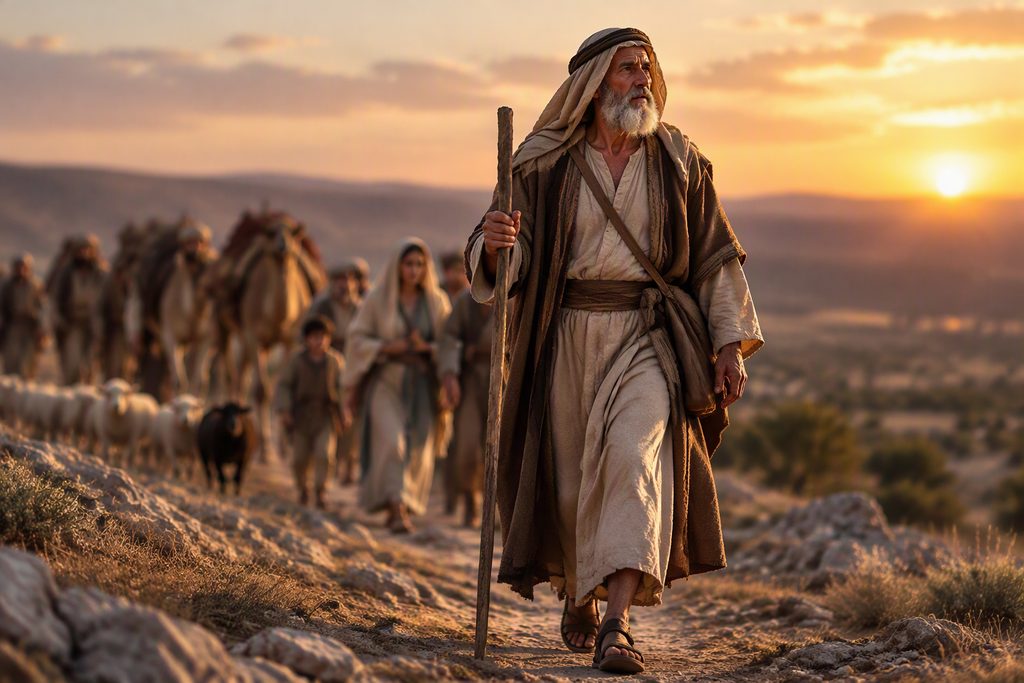
Abraham’s story helps us understand this struggle. God calls him: “Get thee out of thy country, and from thy kindred, and from thy father’s house, unto a land that I will shew thee: And I will make of thee a great nation, and I will bless thee, and make thy name great; and thou shalt be a blessing” (Genesis 12:1-2). Abraham trusts God, but now that trust calls for action. He must leave the life he knows and go where the Lord leads.
This call speaks to us as well: even those who believe have things they need to leave behind. Each of us carries years of upbringing, other people’s opinions, and disappointments that have shaped our expectations and decisions. Old patterns of thinking can hinder our faith long after we have turned to God. We need to consider both what we believe and what actually guides our daily lives.
“Lech lecha,” God’s call to go, invites us to consider our willingness to hear Him and follow. Yet inward impressions require discernment. We can easily mistake our desires or fears for God’s voice. That is why we have Scripture, pastoral guidance, and fellowship with other believers. We need one another’s help to receive correction and gently guide those who have lost their way.
Abraham’s country, family, and father’s household had shaped his life. Our surroundings have shaped us too. Many of us grew up in the Soviet Union and still carry assumptions formed during those years. Moving to Israel does not automatically change them. Here, too, the news, television, and public opinion influence how we think. When we absorb these messages without examining them, we allow the world around us to shape our expectations of the future. As believers, we need to learn to weigh what we hear against God’s Word.
The influence of our childhood home runs particularly deep. We may have learned love, faithfulness, and the value of hard work. We may also have learned to shout, worry, blame those closest to us, or constantly talk about what we lack. Later, when we have families of our own, we discover that we are repeating the reactions we grew up with. We can love our parents and be grateful for them while recognizing that certain habits must end with us.
Deeply rooted beliefs can become strongholds in the mind. We stop noticing them and assume they are the only reasonable way to see life. This is the sense in which we can speak of a pagan mindset: a way of thinking that takes no account of a relationship with the living God. Ethnicity does not settle the matter. A person can be Jewish, know about the covenant, and still allow fear to govern every decision.
The apostle Paul writes: “So then faith cometh by hearing, and hearing by the word of God” (Romans 10:17). We heard the good news of Yeshua, His death for our sins, and His resurrection, and we believed. We should therefore be slow to say of someone who is struggling, “They have no faith.” They may genuinely trust the Lord while their habitual thinking continually resists what they have received in their heart.
Scripture says: “For with the heart man believeth unto righteousness; and with the mouth confession is made unto salvation” (Romans 10:10). Through faith in Yeshua, we receive righteousness from God. We must then learn to live in keeping with that truth. The Word of God we receive in our hearts must also shape our thoughts, words, and decisions. Otherwise, our lives become divided: we profess trust in the Lord while reasoning through our circumstances as though we had been left without His help.
What has occupied your thoughts today? Have you reflected on God’s Word, or gone over the same difficulties again and again? Work, health, family, and finances all deserve attention. But when worry fills our minds, what we heard during worship is soon forgotten. Return to Scripture. Take time to understand it and pray over what you read. Allow the Lord to show you where your assumptions conflict with His truth.
Through the prophet Isaiah, God says: “Let the wicked forsake his way, and the unrighteous man his thoughts: and let him return unto the LORD, and he will have mercy upon him; and to our God, for he will abundantly pardon” (Isaiah 55:7). Both our ways and our thoughts are addressed. Change reaches into our actions and the thinking that gives rise to them. It is difficult to leave an old way of life behind while continuing to agree inwardly with everything that keeps us bound to it.
The Lord continues: “For my thoughts are not your thoughts, neither are your ways my ways, saith the LORD. For as the heavens are higher than the earth, so are my ways higher than your ways, and my thoughts than your thoughts” (Isaiah 55:8-9). As we meditate on Scripture, we learn to see things in the light of God’s wisdom. We begin to recognize where fear has guided us, where habit has taken over, and where we have never sought His will at all. As our minds are renewed, the direction of our lives begins to change.
God compares the work of His Word to rain watering the earth: “So shall my word be that goeth forth out of my mouth: it shall not return unto me void, but it shall accomplish that which I please, and it shall prosper in the thing whereto I sent it” (Isaiah 55:11). We have every reason to trust His Word. The Holy Spirit helps us recognize false beliefs and break free from them. What we hear, however, calls for our attention and response.
Our speech often reveals what is happening within us. When our thoughts dwell continually on lack, illness, and failure, those concerns gradually dominate our conversations. The burden grows heavier for us and for those close to us. We know our circumstances: the doctor’s report, the bank balance, the tensions at home. But amid those concerns, do we remember God’s faithfulness? Do we turn to Him for help? Do we allow His Word to influence what we say?
A pastor once told me that he had almost no money left. He went into a room to pray and inwardly heard a question: “Have I ever abandoned you?” His anxiety subsided. That evening, he told me, help arrived through other people. Sometimes we, too, need to pause and remember how the Lord has sustained us before. Remembering His faithfulness helps us entrust our needs to Him again.
Joshua received clear instruction: “This book of the law shall not depart out of thy mouth; but thou shalt meditate therein day and night, that thou mayest observe to do according to all that is written therein: for then thou shalt make thy way prosperous, and then thou shalt have good success” (Joshua 1:8). Meditation, speech, and obedience belong together here. Saying the right words is not enough. We need to understand them and let them guide specific decisions. This is how God instructed Joshua to walk wisely and succeed in the task before him.
Paul likewise calls believers to renewal: “That ye put off concerning the former conversation the old man, which is corrupt according to the deceitful lusts; And be renewed in the spirit of your mind; And that ye put on the new man, which after God is created in righteousness and true holiness” (Ephesians 4:22-24). There comes a time to grow in maturity: to receive instruction, reconsider our reactions, and change our conduct. We want change in our families, work, and ministry. Are we also willing to let the Lord change us?
The apostle knew what it meant to keep going through hardship. He wrote: “Brethren, I count not myself to have apprehended: but this one thing I do, forgetting those things which are behind, and reaching forth unto those things which are before, I press toward the mark for the prize of the high calling of God in Christ Jesus” (Philippians 3:13-14). What Paul had endured did not become a reason to stop. He continued to pursue the Lord and fulfil his calling. Breaking free from the past means no longer allowing old beliefs to govern our obedience to God today.
God’s blessing is already present in our lives: through Yeshua we have received salvation, His Word has been planted in our hearts, and the Holy Spirit dwells within us. Our response to that grace matters. Repentance involves a willingness to turn around, leave the wrong path, and follow the Lord. So we should ask ourselves: What is He calling me to leave behind today? Which habit, which fear, which belief? God led Abraham toward the blessing He had promised. We, too, need to keep following Him, allowing His Word to renew our minds so that we can flourish in our calling and become a blessing to others.
Pastor Oren Lev Ari