
Victory Through Humility
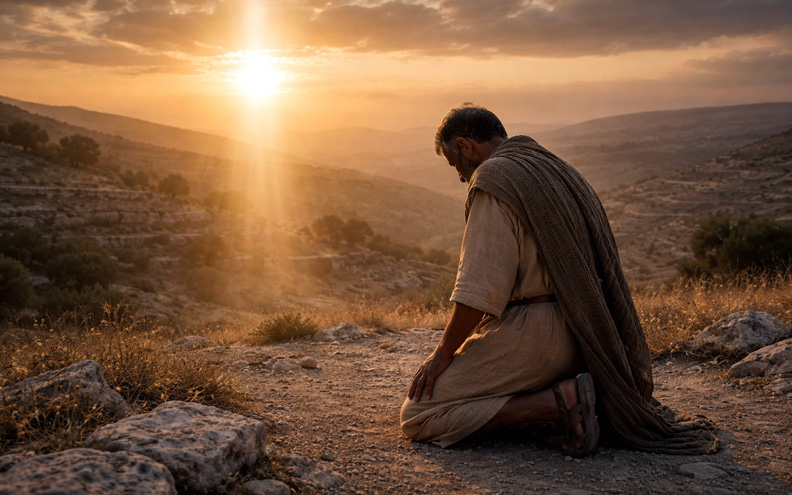
When Scripture says, “The Spirit of the Lord GOD is upon me; because the LORD hath anointed me to preach good tidings unto the meek” (Isaiah 61:1), it is speaking not only of people in material poverty. The good news is first addressed to those whose hearts have been humbled before God, to those who no longer lean on their own self-sufficiency and no longer hide their inward pain behind an outward show of strength. Only such a heart is able to hear the Lord, receive His word, and make room for it in life.
Humility is not defined by social standing, education, or human success. A person may be poor or prosperous, well-known or unnoticed, strong in the eyes of others or crushed by circumstances, yet the real question remains the same: what is happening within? The gospel opens itself not to those who believe themselves sufficiently right, but to those who recognize their need for mercy. That is why both people from deep darkness and people of high standing came to the Lord. Status decides nothing. The condition of the heart decides everything.
Every believer has already walked this path at least once. We believed in the One whom we had not seen with our own eyes. We entrusted ourselves to the word of the Messiah’s death and resurrection, and in that trust a new beginning was born. Humility is not weakness – it is agreeing with God, trusting His word, and being willing to acknowledge that without Him we cannot truly live, be healed, be changed, or overcome. Wherever a person bows before the truth of God, genuine faith begins.
Yet it is often after the first steps with God that danger appears. Having received grace, a person gradually begins to live as though everything from that point onward depends on maturity, discipline, experience, and spiritual skill. What was first received simply and with gratitude later begins to be measured by effort, merit, and inward strain. And so, almost unnoticed, the heart drifts from the path of grace onto the path of self-reliance. Victory does not come because a person has learned to hold himself together more effectively. Victory comes because he remains dependent on God.
The world offers a different understanding of humility. It calls humility a kind of psychological balance, the ability to adapt, inward composure, or a way of preserving one’s resources. But biblical humility goes much deeper. It is not a technique of self-control, nor is it a refined form of human willpower. Humility is not born in the mind but in communion with God. It is the fruit of the spirit that grows where a person is attentive to the voice of the Holy Spirit. Whoever lives in that communion does not remain barren, because grace always bears fruit.
That is why false humility is so dangerous. Outwardly a person may appear quiet, courteous, and even religiously disciplined, while inwardly carrying offense, envy, and hidden bitterness. Yet offense is not a sign of vulnerability – it is one form of pride, refusing to surrender its supposed right to judge another. That is why Scripture speaks so plainly: “But if ye forgive not men their trespasses, neither will your Father forgive your trespasses” (Matthew 6:15). A humble heart does not cling to its own sense of being right, but seeks freedom instead. Wherever a person forgives, invisible chains begin to break.
Pride always tries to claim for itself what was given by mercy. It says, “I achieved this, I earned this, I endured this, I did this.” But the gospel brings us back to another reality: “Every good gift and every perfect gift is from above, and cometh down from the Father of lights” (James 1:17). Everything real comes from Him – salvation, life, mercy, healing, calling, strength, the ability to stand, and the grace not to give up. That is why Scripture says: “God resisteth the proud, but giveth grace unto the humble” (James 4:6). Humility opens the door to greater grace, while pride closes that door with its own hand.
It is crucial to understand that humility does not mean yielding to darkness. We are not called to submit to sin, sickness, fear, the pressure of circumstances, or the works of the devil. We do not call evil good, nor do we thank God for what destroys a person. We do not humble ourselves before darkness – we humble ourselves before God and before His word. Yes, facts may be heavy. A doctor may speak dreadful words. Circumstances may close in from every side. Strength may seem almost gone. But there is a difference between acknowledging a fact and allowing that fact to rule the heart. The humility of faith says: the fact is real, but the final word belongs not to the fact, but to the Lord.
That is why the apostle Peter writes: “Humble yourselves therefore under the mighty hand of God, that he may exalt you in due time: casting all your care upon him; for he careth for you” (1 Peter 5:6-7). This is the path of a believing heart – not living by someone else’s faith, not swinging between fear and self-confidence, not trying to save oneself through frantic religious activity, but laying one’s burden before God. Humility is not capitulation before trouble. It is the transfer of our hope onto the Lord.
We see the perfect image of this path in Yeshua Himself. His humility was not weakness before men, nor was it helplessness before evil. It was complete obedience to the Father. That is why it is written: “he humbled himself, and became obedient unto death, even the death of the cross” (Philippians 2:8). He did not submit to darkness – He submitted to the will of God. And for that very reason, the cross became not defeat, but the road to resurrection and victory. Humility before the Father led Him not to ruin, but to glory.
The same truth is reflected in the story of Martha and Mary. One was anxious, busy, and consumed with many concerns. The other sat at the Lord’s feet and listened to His word. Jesus said to her sister: “Martha, Martha, thou art careful and troubled about many things: but one thing is needful” (Luke 10:41-42). Humility knows how to stop and acknowledge that the most important thing is not to get everything done, but first to receive from the Lord that without which everything else loses its meaning. Not every kind of activity is born of faith, and not every form of busyness is truly service. At times, anxious service reveals that a person has not yet learned to rest in grace.
Even now, God is looking for this very response from His people. “If my people, which are called by my name, shall humble themselves, and pray, and seek my face, and turn from their wicked ways; then will I hear from heaven, and will forgive their sin, and will heal their land” (2 Chronicles 7:14). Humble people are not passive people. They are people of prayer, people of gathering, people of hunger, people who seek not only God’s hand but God’s face. When that sharp sense of need for God disappears from a person’s life, the heart begins to grow hard, even if outwardly everything still appears well.
The word of God always brings judgment to the human heart, because “the word of God is quick, and powerful, and sharper than any twoedged sword” (Hebrews 4:12). It separates the genuine from the false, faith from religious habit, humility from hidden pride. That is why it is so difficult for the proud to remain where truth is being spoken: they resist, justify themselves, close themselves off, and grow irritated. But the humble person, even when it hurts, becomes wiser. He does not run from the light, because he knows that the light is what heals.
This is why the path to victory runs through humility. Victory begins where a person stops trying to save himself and bows before God. It begins where we forgive instead of nursing offense. It begins where we trust the word of God more than our fears. It begins where we stop living by merit and begin living by grace. It begins where we say, “Lord, I need You” – not formally, but with the whole heart.
And so the same call remains before us today: come to the throne of grace, lay your cares before the Lord, stop excusing your pride, and become once more a people who seek His face. Scripture says: “Submit yourselves therefore to God. Resist the devil, and he will flee from you” (James 4:7). The order has not changed. First – humility before God. Then – steadfast resistance to darkness. First – grace. Then – victory. And this is how the Lord lifts up, strengthens, delivers, and leads His children into the fullness of life.
Pastor Oren Lev Ari