
Parashat Va’era: Believing and Trusting God
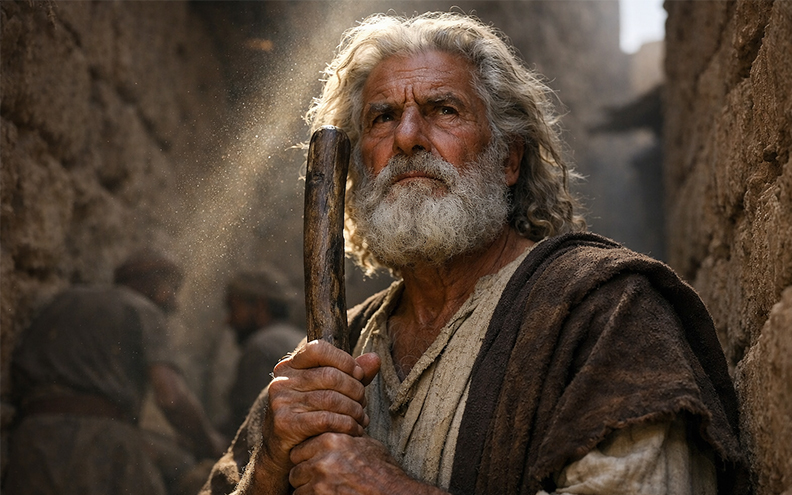
There are passages of Scripture we want to read again and again because they hold, in remarkable unity, God’s heart, human pain, and the key to freedom. The weekly portion of Va’era opens with God’s words to Moses: “I am the LORD. And I appeared unto Abraham, unto Isaac, and unto Jacob, by the name of God Almighty, but by my name JEHOVAH was I not known to them” (Exodus 6:2-3). This is not merely an introduction to a new story—it is the moment when God, as it were, reintroduces Himself to His people, revealing the depth of His covenant faithfulness.
What follows is one of the most powerful promises in the Torah, where every word is a step toward freedom: “Wherefore say unto the children of Israel, I am the LORD, and I will bring you out from under the burdens of the Egyptians, and I will rid you out of their bondage, and I will redeem you with a stretched out arm, and with great judgments: And I will take you to me for a people, and I will be to you a God” (Exodus 6:6-7). God does not offer people a theory of salvation—He promises action. He speaks of exodus, deliverance, restoration of identity, renewal of relationship: “I will be to you a God.”
But here the narrative takes a sharp, almost painful turn: Moses relays these words to the children of Israel, and Scripture says: “But they hearkened not unto Moses for anguish of spirit, and for cruel bondage” (Exodus 6:9). God spoke—but the people could not receive it. Not because the promise was weak, but because their souls were crushed and their breath was cut off by slavery.
And here a critical spiritual law is revealed: faith does not grow in a vacuum. “So then faith cometh by hearing, and hearing by the word of God” (Romans 10:17). If the word of God does not penetrate within, faith does not rise, and a person remains captive to what they see, feel, and fear. The question stands plainly: what was brought to the people—human opinion or God’s word? It was God’s word, beginning with “I am the LORD.”
When God reminds them of Abraham, Isaac, and Jacob, He reminds them of the covenant—of a foundation that does not depend on our strength or stability. The text carries a thought that must become our inner anchor: “Our participation in the covenant is to believe and trust in what the Lord has done.” If everything rested on our works, the conversation about the Promised Land would have ended before it began. But the covenant stands on God’s side of faithfulness, and that is precisely why God has a “land”—a prepared place of goodness—for everyone He is leading.
Scripture directly links the loss of the promised with unbelief: “For unto us was the gospel preached, as well as unto them: but the word preached did not profit them, not being mixed with faith in them that heard it” (Hebrews 4:2). This is a sobering formula: the word was heard, but it did not mingle with faith. And so instead of a path—circles; instead of freedom—delay; instead of entrance—standing at the threshold.
When Yeshua was asked about the “works of God,” He brought people back to the beginning, to the very source: “This is the work of God, that ye believe on him whom he hath sent” (John 6:29). But here lies a subtle and painful edge: one can believe “in Yeshua” as a doctrinal fact and yet not trust Him as the Living Lord who speaks and leads. Without trust, faith becomes a form that gives no strength to walk.
When God speaks of blessing and covenant, the adversary always attempts one thing—to cut off a person’s hearing. Pressure of circumstances, attacks, fear, deception—all of it is aimed at drawing a person more into “what is happening around them” than into “what God has said.” “Every time God speaks to us about our promised land… the enemy begins to resist it”—because blessing becomes a testimony of God’s glory, and that is what he hates.
One of Egypt’s crudest yet most effective weapons is to overload a person with work so that no strength or time remains to hear the Lord. Exodus shows this openly: “Ye shall no more give the people straw to make brick… let there more work be laid upon the men… and let them not regard vain words” (Exodus 5:7-9). Where God calls to service and a feast unto Him, Pharaoh calls it “idle talk” and increases the burden.
Here it is important not to fall into extremes: Scripture does not glorify laziness or encourage irresponsibility. It speaks clearly: “If any would not work, neither should he eat” (2 Thessalonians 3:10). But it just as clearly teaches the order under heaven: labor must not become an idol that devours spiritual life. “Six days shalt thou labour… but the seventh day is the sabbath of the LORD thy God” (Exodus 20:9-10). Work is necessary, but when it turns into Pharaoh’s “straw and bricks” and takes away the ability to hear the Lord, a person loses not money—he loses the breath of his soul.
But God leads His own not by the human ladder of merit, but by covenant faithfulness. He knows how to give favor where it cannot be earned, and to open doors where there were none. And so it is vital to pause and accept with the heart a simple yet liberating truth: “Stop hoping that your blessing will increase because of your abilities… blessing increases… because we believe and trust in Him.” Then labor becomes different—not Egypt’s frantic construction, but calm service to God in every sphere of life.
Yeshua speaks of Himself as the Shepherd whose voice is recognized: “The sheep hear his voice… and the sheep follow him: for they know his voice” (John 10:3-4). And then He exposes the enemy’s intention and the purpose of His coming: “The thief cometh not, but for to steal, and to kill, and to destroy: I am come that they might have life, and that they might have it more abundantly” (John 10:10). Abundance is not needed “someday”—it is needed here, on earth—as the fullness of life in God, when we do not live at the dictation of fear.
And so the question, in the end, is not about how much strength, status, or resources we have. God says again and again: “I will bring out,” “I will deliver,” “I will bring in.” Our part is to learn to listen, not to allow a “break” within, to return to what God has said, even when it is dark and heavy around us. And then we can say to Him in simple words that change the direction of life: “Lord, You are right. I trust You despite the circumstances. I will not remain in Egypt.”
Pastor Oren Lev Ari