
Don’t Lose Your Focus: How to Return to God’s Calling and the Joy of Serving
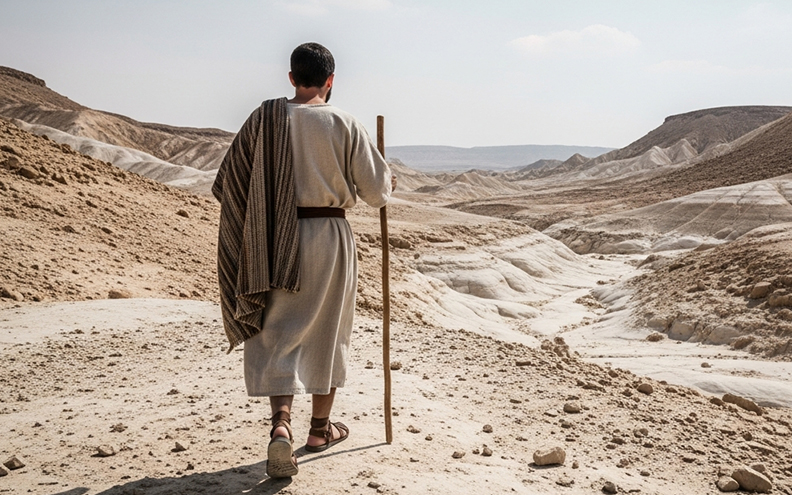
There are moments when a believer looks back and quietly asks: “Where is the fire I had at the beginning?” There was a time when everything connected with God felt like an honor and a privilege: praying for someone, opening your home for a small group, serving in the congregation, helping with the simplest tasks. But over the years worries, fatigue, disappointments and inner wounds shift our gaze. Almost without noticing, we begin to look not at the Lord and not at people, but first of all at ourselves. That is how our spiritual focus is lost.
Scripture gives us a striking picture in the life of Abraham. He is ninety-nine years old, it is the heat of the day, and he has just gone through the pain of circumcision. Humanly speaking, this is a moment to close the tent, lie down in the shade and see no one. Yet Abraham “sits at the entrance of his tent,” waiting for travelers so he can serve them. His wounds are still fresh, his body is weak, but his heart is open. His goal is not self-pity but sensitivity to God’s desire to bless others. And even though the New Testament clearly tells us: “For in Christ Jesus neither circumcision nor uncircumcision has any value. The only thing that counts is faith expressing itself through love” (Galatians 5:6), the principle is the same: God is looking not for external signs, but for a heart ready to serve.
In the light of the New Testament, circumcision becomes a picture of the heart that allows God to cut away what is unnecessary, making it tender and responsive to what matters to Him. Until a person lets the Lord “circumcise” their heart, they remain rough, self-focused and insensitive to the pain of others. Abraham, having walked in obedience, becomes extraordinarily attentive to people around him: he sees three visitors, runs to meet them, bows low, offers water, shade and bread, brings the best of his herd. This is how a man behaves whose heart is tuned to the wavelength of God’s love.
So often our story is the opposite. At the beginning of our walk with God, we wanted to do anything for Him: help in ministry, support the congregation, call someone in need, invite a friend to a meeting. With time many lose that simple readiness. Different thoughts begin to sound: “Who is going to care about me? Why should I sacrifice my time again? Why is nobody serving me?” Slowly our gaze moves from the Lord and His purpose to ourselves. When you stop living with yourself at the center, God restores your joy and sense of purpose, but when everything revolves around your own feelings, your focus blurs and joy quietly slips away.
Scripture warns us that neglecting to serve God and people harms us first of all. The Lord says to His people: “Worship the Lord your God, and his blessing will be on your food and water. I will take away sickness from among you” (Exodus 23:25). This is not about a mechanical “duty” but about service as a way of life, about the direction of the heart. When we serve the Lord by serving people, God steps into the details of our everyday lives: He blesses our “food and water”, cares for our health and protects us from the enemy. Satan hates human beings because we bear God’s image, but the Lord Himself promises to stand for those who choose to serve Him.
Notice something else: God speaks in the plural, addressing the whole people. This is not only about personal spirituality but about a shared, corporate call to serve, as we build God’s house together, supporting and strengthening one another. Through such service God protects our homes, touches our children and fills our days with meaning. The right focus of a believer is to love the Lord and serve people, not to orbit endlessly around their own feelings and frustrations. A person engaged in God’s work is far less likely to sink into dark thoughts, discouragement and self-absorption, because their heart is involved in something that goes far beyond their private problems.
What stands in the way of this? Very often it is pride and self-centeredness. The psalmist writes: “Though the Lord is exalted, he looks kindly on the lowly; though lofty, he sees them from afar” (Psalm 138:6). Pride is not only arrogant words; it is a state in which a person’s whole attention is turned inward: their opinions, their feelings, their grievances, their achievements. Such a person lives in a tight orbit around “me”. Scripture is clear that God sees the proud “from afar” and does not draw them close. As long as our own self is the center of our universe, we cannot clearly hear the Lord or discern His ways.
When we return to Abraham, we see a different posture. He is great in God’s plan, his name is known throughout the world, yet in this moment he behaves like a simple servant. He runs to the guests, arranges shade under a tree, brings water to wash their feet, offers bread, prepares the best calf. In this story many details point to the Messiah: the tree reminds us of the cross, the bread of God’s word and of the Bread of Life, the lamb of Yeshua’s sacrifice. But the key is Abraham’s heart. In response to his service he hears an unbelievable promise: he and Sarah will have a son, despite their age. Sarah laughs inwardly at the thought of bearing a child in her old age, but God speaks to Abraham with remarkable gentleness, without destroying trust between husband and wife, and asks: “Is anything too hard for the Lord?” (Genesis 18:14). God never sows division between a husband and a wife, never plays on our weaknesses. He lifts Abraham’s gaze above what seems obvious and reminds him that nothing is impossible for Him.
This leads us to a simple but searching question: what kind of God do I believe in? A weak, limited “religious God” who barely copes with my life, or the One who created the visible and the invisible and holds eternity in His hand? The God who revealed Himself to Abraham is the Most High, for whom nothing is impossible. He can do the impossible in our family, in our health, in our ministry, in our nation. But for that to happen, our gaze must be fixed on Him rather than on our fears and calculations.
The story of Lot shows us what happens when a person loses the right focus. A conflict arises between the herdsmen of Abraham and Lot. As a man of God, Abraham seeks peace rather than victory in the argument. He gives Lot the right to choose where to go. Lot chooses what looks attractive: the well-watered plain of the Jordan, Sodom and Gomorrah. He looks with the eyes of the flesh, not of the spirit. Little by little he settles into a city where evil has become normal. His family absorbs the atmosphere of that place, and when judgment comes, the outcome is tragic: Lot’s wife looks back and becomes a pillar of salt, his daughters make terrible choices because they believe the world has ended. It is the sad story of a man who, step by step, moved away from God’s focus and in the end almost lost everything.
We live in times that in many ways resemble Sodom. The world is full of hatred, wars, struggles for power and money. People divide into camps, despise and destroy one another over politics, nationality or faith. Yet God’s people are called to walk a different path: to love those on the right and on the left, Jews and Gentiles, Arabs and all whom God brings near, without calling evil good or justifying lawlessness. Even if the society around us lives by the rules of Sodom, a believer keeps their focus on the holiness of God and His love for people, not on hatred and division.
Abraham, who kept the right focus, becomes a man with whom God shares His plans. Before the judgment on Sodom, the Lord says, in effect, that He will not hide from Abraham what He is about to do. Abraham stands in the gap and intercedes, pleading for the city for the sake of fifty, forty, thirty, twenty, ten righteous people. Here we see the picture of a person who not only serves within his own household but carries before God the destiny of entire cities. A person with the right focus sees beyond the borders of their own family and needs: they pray for their people, for their country, for those around them, even when these people are far from God.
The New Testament leads us to the same conclusion, describing spiritual focus as a steady gaze fixed on Jesus. The author of Hebrews writes: “Therefore, since we are surrounded by such a great cloud of witnesses, let us throw off everything that hinders and the sin that so easily entangles, and let us run with perseverance the race marked out for us, fixing our eyes on Jesus, the pioneer and perfecter of faith. For the joy set before him he endured the cross, scorning its shame, and sat down at the right hand of the throne of God. Consider him who endured such opposition from sinners, so that you will not grow weary and lose heart” (Hebrews 12:1-3). The secret of endurance is not to be stronger than others, but to learn to look where He looked and to love what He loves.
Many of us began our journey with zeal and love, but along the way we became tired, offended, disappointed or confused. Somewhere on that road our gaze became more fixed on ourselves than on the Lord. Yet the good news is that God is the God of new beginnings. Even if you have lost your direction, made poor choices and sinned, even if you know you are walking down the wrong path today, this is not the end. He is calling you to stop, lift up your eyes, acknowledge your need and ask for His help. He is patient, rich in mercy and still able to restore clarity and joy. Even if you have lost your way and drifted from God’s path, He is still calling you back to His presence and His purpose, inviting you to recover your focus on Him and on His calling for your life.
May the Holy Spirit help each of us to look honestly at our hearts: where is our focus today? On our hurts, fears and weaknesses, or on the Lord who calls us to serve Him and the people around us? When we once again learn to look to Him as Abraham did, and to serve as he served, our days are filled not with empty busyness but with meaning, joy and God’s nearness. And in that path of renewed focus we find our way back to the first love and the joy of serving the One who never lost sight of us.
Pastor Oren lev Ari